



The mission
A UX firm wants to enter the fitness app market. As its ergonomist, I benchmark the main apps, choose what to evaluate, then adapt the method when the firm turns to exergames.
My angle
These apps are never neutral: they set goals, count, reward and remind. I evaluated them on accessibility, usability, emotionality and influence, not only on features.
What the data say
Apps that count everything concentrate testimonies of anxiety; the one that asks least is the best rated. Store listings target women with weight loss and an ideal body. And the business model often caps the very exercise it sells.
My role
An individual master's assignment (May 2025), which I extended alone in October 2026 with public data: collecting the reviews, coding them, analysing them and writing it all up.
The method
A benchmark of six apps on a five-dimension grid (utility, usability, accessibility, emotionality, influence), then checked against what users actually write in their reviews.
Three recommendations
1. A "no numbers" mode to hide calories, weight and scores. 2. Billing as easy to stop as to start, with a reminder before each renewal. 3. Goals by intention (strength, energy, pleasure) rather than by gender. All nine are in section 7.5.
Contents
A benchmark that asks what interfaces do to bodies.
"Benchmark the main fitness apps." Then: "now do exergames."
An ergonomic benchmark is a comparative evaluation of competing systems at the start of a design project (Sauro, 2018). The scenario: I work in a UX firm; my manager asks me to select five apps, synthesise their functions, choose the dimensions of human-system interaction to evaluate, then, when the firm widens its offer to exergames such as Wii Fit, say what can be reused and what must change.
Not just a comparison: a look at what the interfaces expect from bodies.
A fitness app decides what counts as progress, what deserves a badge, when to remind you and what to show you. These choices carry norms: of performance, of appearance, of gender. I chose to treat the benchmark as a reflexive dive into these dynamics, as an ergonomist but also as a user of several of these apps.
Three trends I identified
Personalisation by artificial intelligence, gamification as the engine of motivation, and the centralisation of health data through wearables.
My conviction
Good design respects, supports and frees people. It does not control, assign or standardise.
Six apps, six philosophies, two axes.
Five apps for five philosophies of fitness, plus an exergame for the second part of the mission. Figures from Google Play France, October 2026.
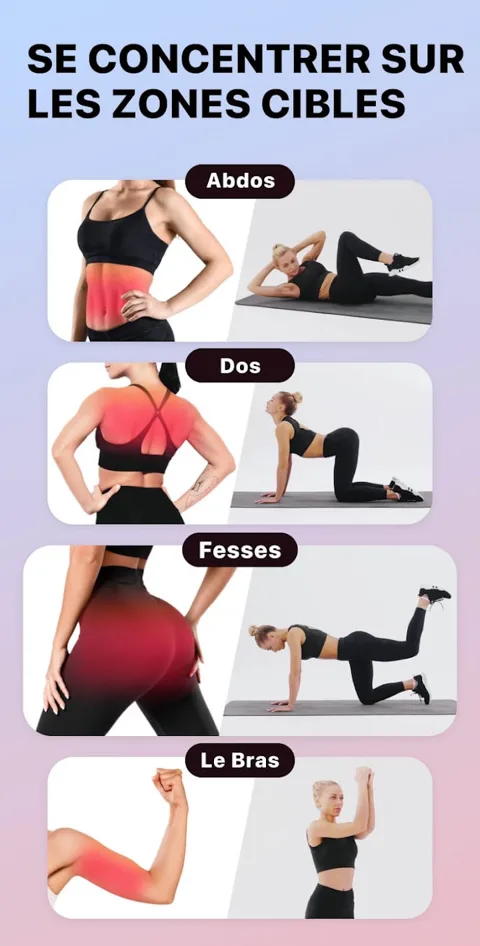
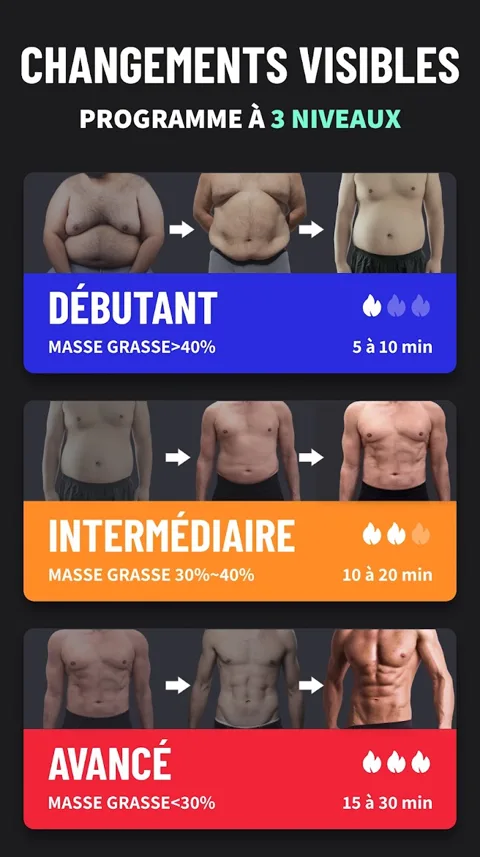
 Leap FitnessHome training
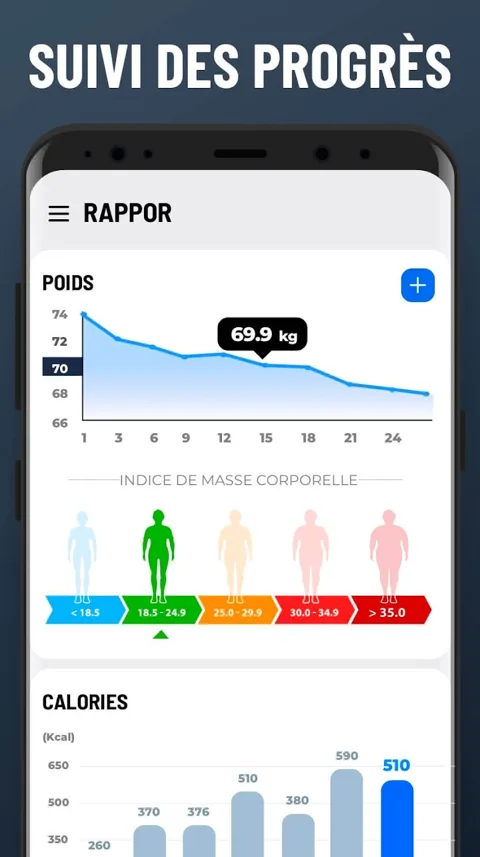
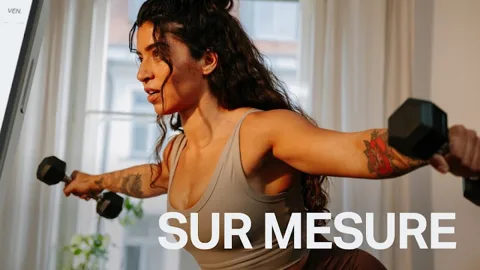
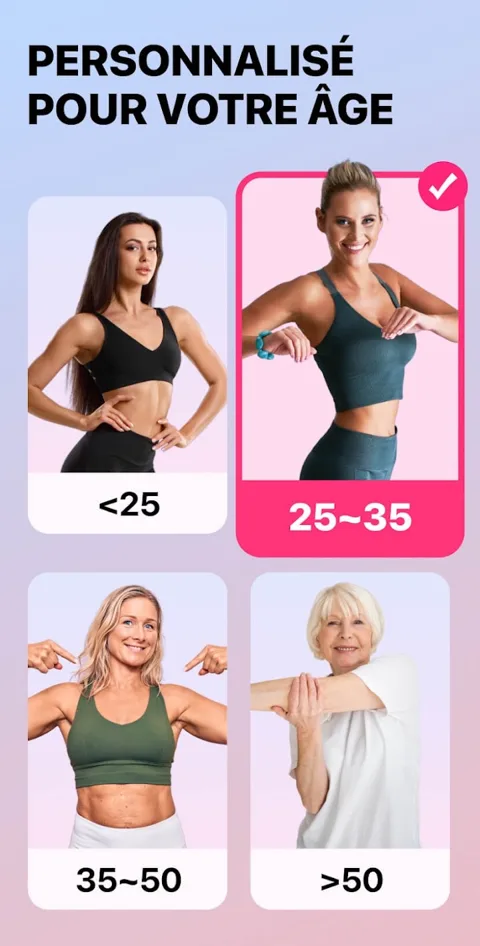
Targeted programmes by body area, no equipment needed, every move shown by a male and a female coach.
Accessible to everyone, and it shows.
 MyFitnessPalFood tracking
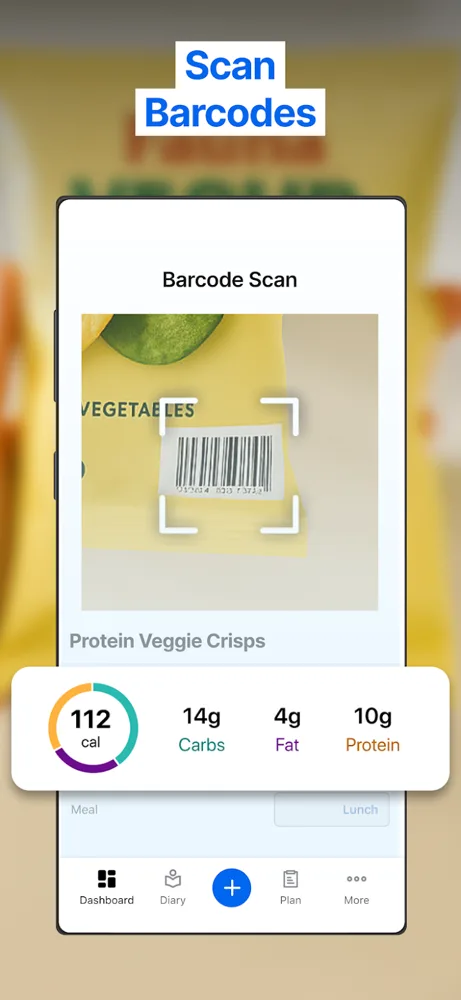
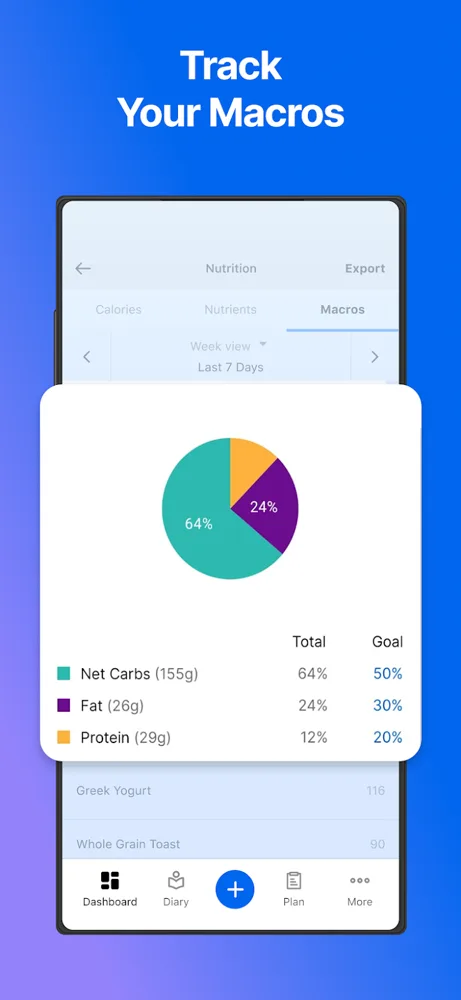
Huge food database, barcode scanner, calories and macronutrients, links with Fitbit and Samsung Health.
Powerful, but not always kind.
 FreeleticsDiscipline
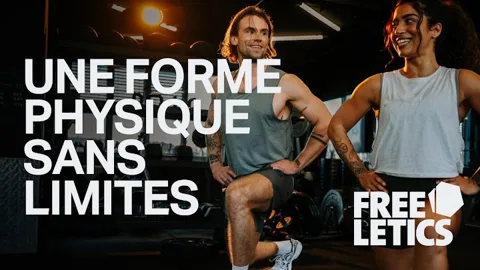
Bodyweight training planned by an AI coach that adjusts after each session's feedback; mindset audio.
An algorithmic stoicism: suffering turned into power.
 Fitbit / Google HealthWearable ecosystem
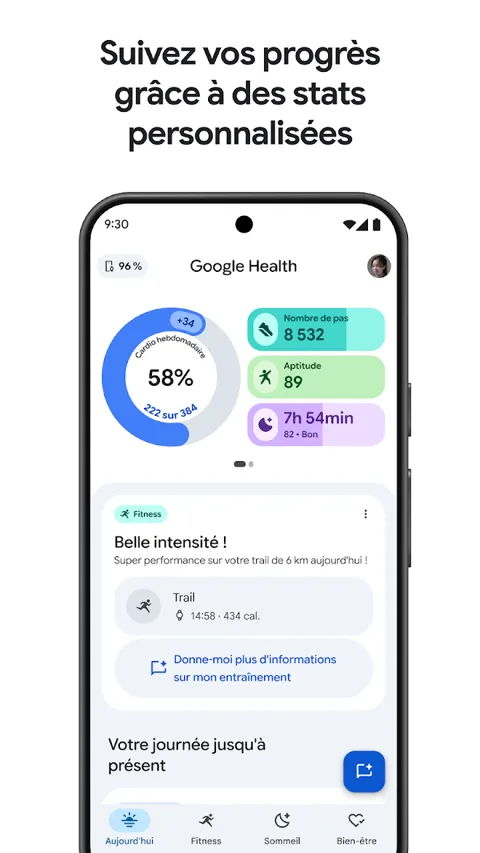
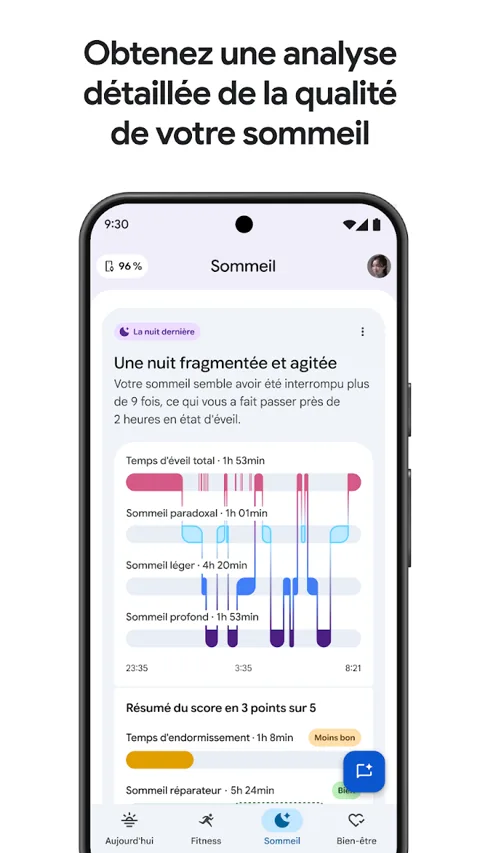
Activity, sleep, heart rate and stress from a wristband, badges and challenges; became Google Health in May 2026.
Solid, but paternalistic, almost intrusive.
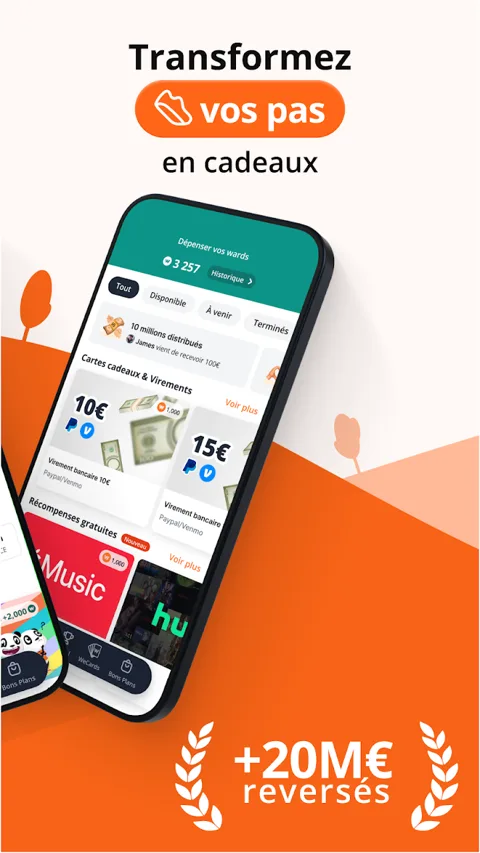
 WeWardRewards
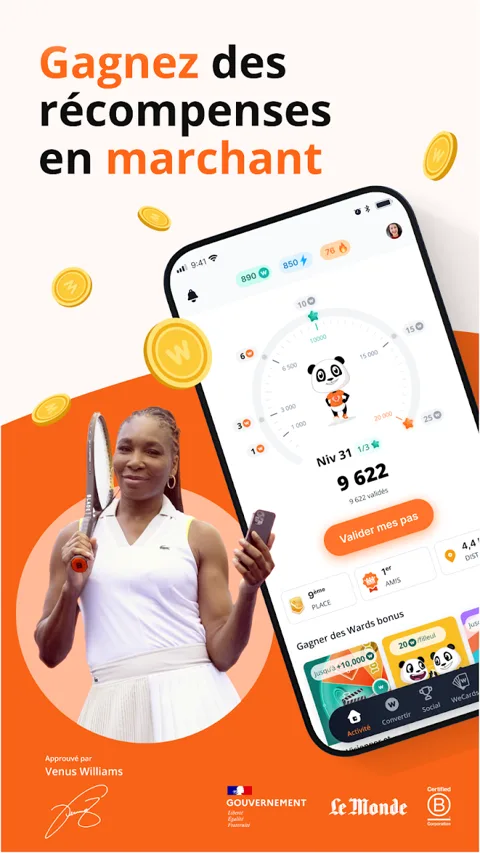
Steps converted into a currency, exchangeable for money, gift cards or donations; missions, cards to collect.
Exercise is no longer an effort, but a gain.
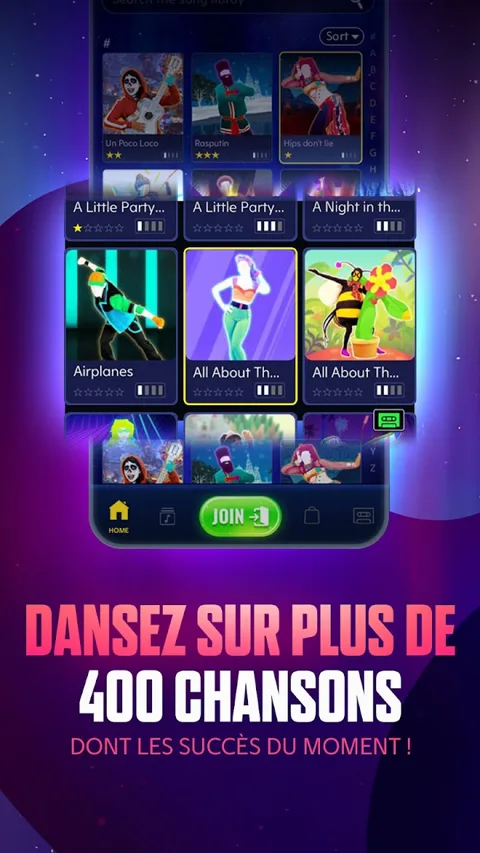
 Just Dance NowExergame
Dance with the phone as a controller in front of a screen; songs unlocked with coins or a VIP pass.
The fun of the game as the engine of effort.
Screenshots: public Google Play listings of each publisher, reproduced for analysis.
| Function | Leap | MyFitnessPal | Freeletics | Fitbit | WeWard | Just Dance Now |
|---|---|---|---|---|---|---|
| Guided workouts | ● | ● | ● | ● | ||
| No equipment needed | ● | ● | ● | |||
| Food and calorie tracking | ● | ● | ||||
| Weight, BMI, progress charts | ● | ● | ● | ● | ||
| Wearable data (sleep, heart) | ● | |||||
| Adaptive AI coach | ● | ● | ||||
| Badges, streaks, challenges | ● | ● | ● | ● | ||
| Money or goods as rewards | ● | |||||
| Community | ● | ● | ● | ● | ● | |
| Daily reminders | ● | ● | ● | ● | ● |
The most common functions are progress tracking, reminders and goal setting. The specific ones tell each app's philosophy: the double male-female demonstration for Leap, the barcode scanner for MyFitnessPal, the adaptive coach for Freeletics, the sensor ecosystem for Fitbit, money for WeWard, the body as a controller for Just Dance.
Two axes separate them.
Horizontally, how much the app measures the body (calories, sleep, heart, steps) rather than simply guiding a session. Vertically, how much of the essential is behind a payment. Circle size: number of ratings on the store. The results that follow line up with this map: complaints rise towards the bottom right.
Qualitative placement, based on store listings and the analysis of reviews.
A sixth fitness app, Zing AI, was in the original assignment to represent fully AI-driven coaching. It has too few French reviews (28) to be analysed with the others, so I left it out of the extension.
A five-dimension grid, checked against 4,835 reviews.
Five dimensions, because a fitness app touches self-image.
Brangier and Bastien (2010) describe how the ergonomics of digital products widened from accessibility and usability to emotionality and influence. I kept the four, and added utility: an app can be smooth and still useless if it answers no real need.
| Dimension | Question asked | What I look at |
|---|---|---|
| Utility | Does it meet a real need? | Performance, gentle return to exercise, emotional support: needs differ |
| Usability | Can you reach your goal without friction? | Clear paths, feedback, cognitive load of key actions such as logging a meal |
| Accessibility | Who is left out? | Beginners, older people, pregnancy, injuries, no equipment, no money, language, contrast |
| Emotionality | What does it make you feel about yourself? | Encouragement or guilt, comparison to an implicit norm, gendered goals |
| Influence | Does it push in a healthy way? | Gamification, notifications, rewards, renewals: motivation or manipulation |
Checking the grid against what users actually write.
1. Store data
Rating, number of ratings, installs, business model and description of each app on Google Play France.
2. 4,835 reviews
For each app, the 600 most recent French reviews and the 300 judged most useful, without duplicates. No names kept. Each review is tagged with themes from a keyword dictionary. Quotes are translated from French.
3. Close reading
Keywords are too blunt for well-being: "shame" also catches complaints about prices. I read the 204 candidate reviews one by one and kept only those describing an effect on mood or self-image.
4. Store listings and gender
Same publisher, three apps: one for women, one for men, one general. I compared their vocabulary in French and in English.
5. Literature
Published studies on calorie tracking and eating disorders, and a meta-analysis on exergames, to support or nuance what reviews say.
Usual benchmarks ask "is it easy to use?". Here I also ask "does it do good, and to whom?".
Users forgive the effort, not lost features or surprise bills.
The best rated app is the one that asks the least.
On Android, Leap keeps 4.8 out of 5 in recent reviews, with only 2% of negative ones. It is free, works offline and asks for nothing but a few minutes. At the other end, Fitbit falls from 3.6 overall to 2.0 in recent reviews: 71% are negative since it became Google Health. A good store rating can hide a recent collapse: the overall score mixes ten years of opinions. On iPhone, the picture changes for Leap (6.4).
Leap FitnessMyFitnessPalFreeleticsFitbit / Google HealthWeWardJust Dance NowGrey bar: overall store rating, all years. Coloured bar: mean of the reviews analysed (mostly recent).
Share of reviews mentioning each theme. The darker the cell, the more often it comes up.
| Theme | Leap Fitness | MyFitnessPal | Freeletics | Fitbit | WeWard | Just Dance Now |
|---|---|---|---|---|---|---|
| Subscription, payment, refund | 2 % | 19 % | 20 % | 7 % | 6 % | 15 % |
| Bugs, syncing, login | 1 % | 17 % | 5 % | 24 % | 17 % | 20 % |
| Ads | 5 % | 3 % | 1 % | 0 % | 11 % | 1 % |
| Switch to Google Health | 0 % | 1 % | 0 % | 21 % | 0 % | 0 % |
| Motivation | 3 % | 1 % | 7 % | 1 % | 8 % | 0 % |
| Notifications, reminders | 2 % | 1 % | 3 % | 5 % | 1 % | 1 % |
| AI coach | 0 % | 1 % | 1 % | 8 % | 0 % | 0 % |
Money before the workout
Subscriptions and payments come up in 1 review in 5 for MyFitnessPal and Freeletics, versus 2% for Leap.
Bugs break trust
Among the 1,675 negative reviews, a quarter mention a bug, a sync problem or a login failure.
Notifications, rarely
I expected reminders to annoy. They appear in at most 5% of reviews; when they do, it is about their tone or timing.
Ratings follow product decisions.
The most useful reviews go back several years, which lets us follow each app over time. MyFitnessPal goes from 3.7 in 2020 to 2.9 in 2022, and never recovers: that is the year barcode scanning, the feature that made logging easy, was reserved for premium. Just Dance Now goes the other way, from 2.6 in 2020 to 3.5 in 2024. Freeletics drops in 2026 to 3.1, with complaints about renewals.
Only years with at least 15 reviews are shown; dot size grows with the number of reviews.
“I'm discovering with amazement that food scanning is now reserved for premium members. I'm uninstalling right away.”
“I'm ready to pay for new features, not for the right to use old ones.”
“Second time my subscription renewed although I had stopped it.”
162 reviews announce they are leaving.
Reviews announcing an uninstall or a switch
Reason given in these 162 reviews
Negative reviews (1-2★) that got a reply from the publisher
Most publishers answer the large majority of negative reviews. Freeletics stands out: it answers barely one negative review in four, while it is the app most accused of silent renewals. The complaints that hurt the brand most are the ones left unanswered.
Taking away a free feature costs more than never offering it: users experience it as a loss, not as a price.
People rarely leave because of a missing feature. They leave because something that worked stops working, or because something free becomes paid.
The more an app counts the body, the more it weighs on it.
Counting everything is not neutral.
Out of the 204 reviews read one by one, 29 describe an effect on mood or self-image. Few, but their distribution is clear: negative effects concentrate in the apps that quantify the body (calories, sleep, scores), positive ones in the apps that let people train at their own pace.
Negative effect on mood or self-image
Positive effect: confidence, less stress
“It's starting to turn into an obsession: as soon as I go a bit over in calories or carbs, it stresses me and I feel guilty.”
“At 3am my watch vibrates to tell me "the night seems difficult". I had to take a pill to get back to sleep.”
“Going to gyms where everyone can watch you makes me anxious. This app helped me enormously.”
Among 105 people diagnosed with an eating disorder, 75% used MyFitnessPal and 73% of them felt the app had contributed to their disorder (Levinson et al., 2017). In 493 students, calorie tracking went with more anxious attitudes towards food, and fitness tracking was a unique indicator of eating disorder symptoms (Simpson & Mazzeo, 2017). Both studies are correlational: they do not prove the apps cause the disorders, but they show these tools were not designed for vulnerable users.
One MyFitnessPal review describes exactly this path, up to a hospital stay for anorexia. I do not quote it, out of respect.
When the business model competes with the exercise.
“I sometimes walk over 20,000 steps and earn only 25 Wards, while watching the day's videos earns me 60.”
“Annual subscription at 99€ renewed automatically without any email to warn me.”
“I wanted a playful way to do a bit of exercise while having fun. Failed.”
Same publisher, same exercises, two promises.
In the assignment, I noted that apps send women to weight loss and glutes, and men to muscle and performance. To check it without creating accounts, I compared the official listings of three apps by the same publisher, Leap Fitness Group, each with more than 100 million installs.
| Vocabulary | "Women's fitness" | "Weight loss for men" | "Home workouts" (general) |
|---|---|---|---|
| Slimming, weight, burning fat | 9 | 10 | 0 |
| Muscle, strength, abs | 2 | 11 | 5 |
| Glutes, thighs | 2 | 0 | 0 |
| Ideal body (bikini, goddess, perfect body) | 3 | 0 | 0 |
| Health | 1 | 0 | 0 |
The English listings show the same split. Weight loss is not reserved for women: the difference lies in the ideal promised.
For women
"Sweat 7 minutes a day to get the perfect body for a bikini", "a goddess body in no time", "slim your thighs".
For men
"Say goodbye to chest fat", "focuses on men's key areas, the abdomen and the chest", and a low-impact option for joints.
The "general" one
Muscle-building for every muscle group, and "a six-pack from home". The default version speaks muscle; the women's version speaks slimness.
Thought for young, able, motivated people with time.
In the assignment, I widened accessibility beyond disability: beginners, pregnant women, people without equipment or money. Reviews give concrete faces to these exclusions.
“Only downside: age is not taken into account. I'm 51, that's fine, but at 75?”
“White on light grey: the number of repetitions is hard to read.”
“Not compatible with every watch: if you don't have a Fitbit or Google one, forget it.”
“Mental coaching is still in English.”
“It's free, so I understand there are ads, but there are tons of programmes adapted to what we want.”
“At 63, Freeletics adapts its exercises when I'm tired, without judging.”
Personalisation by AI, the first trend I identified, put to the test.
When it works: it listens
Freeletics users praise a coach that adjusts after each session's feedback and raises the level with progress. Even users wary of AI end up convinced, as long as the AI serves their own data.
When it breaks: it overrides
In Google Health, the coach takes the place of the data instead of serving it: it forgets the history, doubles meals, modifies or deletes logged activities. Users then lose trust in the whole app, not only in the AI.
“The virtual coach really takes our post-session evaluations into account, that's cool.”
“Surprisingly I quite like it, although I was reluctant about AI.”
“The AI modifies and deletes activities I recorded, so my data is lost.”
Gamification motivates, as long as it rewards the activity. When it rewards attention (ads), spending (card packs) or simply not cancelling in time, it turns motivation into a lever on the user rather than for them.
Accessibility is also economic: the app that stays free with light ads (Leap) is the one beginners thank most. And it is linguistic: an audio coach only in English excludes part of the French audience.
An AI coach is accepted when it adapts the plan to what the person says, and rejected when it rewrites what the person did. The line to respect: the user's data and history stay theirs.
What users cannot see: their data and the price they pay.
An app that counts your body also counts a lot about you.
The third trend I identified in the assignment was the centralisation of health data. Every Google Play listing has a "Data safety" section, filled in by the publisher: what the app collects, what it shares with other companies, and why. I recorded it for the six apps. It is a declaration, not an audit, but it shows what each publisher is willing to put in writing.
The most sober
Leap declares 6 types of data, none about health or location, and shares nothing. The best rated app on Android is also the one that asks the least about you.
Sharing little is not collecting little
Google Health declares sharing nothing but collects the most: 22 types, from health data to contacts, installed apps and audio recordings (half of them optional).
| App | Health and fitness | Location | Used for advertising |
|---|---|---|---|
| Leap | none | none | no data declared |
| MyFitnessPal | physical activity | exact | exact location, shared with other companies |
| Freeletics | health and physical activity | exact and approximate | physical activity, email, identifiers |
| Fitbit / Google Health | health and physical activity | exact and approximate (optional) | name, email, app interactions, purchases |
| WeWard | physical activity (optional) | exact and approximate (optional) | installed apps, shared with other companies |
| Just Dance Now | none | approximate, shared | location, actions, purchases |
All six declare encrypting data in transit and letting users request deletion.
Replacing a tool people rely on is a design act.
On 19 May 2026, the Fitbit app updated itself into Google Health, centred on an AI coach. Since then, 649 French reviews: average 2.0 out of 5, 70% negative, and 1 in 4 explicitly mentions the switch. Users mourn lost features (detailed night-time oxygen curve, ECG export, French meditations, badges) and an AI coach that "hallucinates" sessions never done.
“Health is not only sports performance. Meditating, walking, eating well deserve simplicity and kindness.”
The same subscription, at up to seven different prices.
Payment is where the journey falls hardest. To see what users actually face, I recorded the ten best-selling in-app purchases that the App Store lists for each app, and the price range Google Play shows. Neither store says which offer a given person will see.
Annual subscriptions listed (one dot per price)
One product, seven prices
Leap's annual subscription is listed seven times, from €24.99 to €79.99: more than three times the price for the same programme.
A day costs more than a month
Just Dance Now sells a one-day pass at up to €5.99, while a month starts at €3.99. The person who wants to dance tonight pays the most.
WeWard sells the collection
6 of its 10 best-selling purchases are card packs or boosts (€0.99 to €9.99), ahead of the premium subscription at €4.49 a month.
| App | Monthly (App Store) | Annual (App Store) | Other best-sellers | Google Play range |
|---|---|---|---|---|
| Leap | 9.99 / 15.99 € | 24.99 to 79.99 € (7 prices) | quarterly 22.99 € | 2.39 to 79.99 € |
| MyFitnessPal | 9.99 / 21.99 € | 49.99 / 87.99 € | - | 1.09 to 119.99 € |
| Freeletics | duration not shown | duration not shown | coach 34.99 to 99.99 €, training and nutrition 52.99 € | 1.19 to 144.99 € |
| Fitbit / Google Health | 8.99 € | 79.99 / 99.99 € | - | 8.49 to 99.99 € |
| WeWard | 4.49 € | 32.99 € | card packs 0.99 to 9.99 €, boost 0.99 € | 0.79 to 169.99 € |
| Just Dance Now | 3.99 to 6.99 € | 25.99 / 27.49 € | 1 day 2.99 / 5.99 €, 3 months 12.99 € | 0.49 to 109.99 € |
The App Store lists the names and prices of the ten best-selling purchases, without saying which are introductory, promotional or old offers. A MyFitnessPal "annual" offer at €9.99 is left out, as it is probably a special offer.
Same apps, other platform: most findings hold, one is overturned.
Until here, everything came from Android. To check whether the findings depend on the platform, I collected 2,650 French reviews from the App Store (300 to 500 per app, the most recent ones Apple makes public) and coded them with the same dictionary. I compared them with the Android reviews from the same period.
Mean rating of written reviews
What holds
Payment and bugs remain the main complaints for MyFitnessPal, Freeletics and Just Dance Now, even more often than on Android. Google Health stays near the bottom (2.2 out of 5), with bugs in a third of reviews.
What is overturned
Leap drops from 4.8 to 4.0, and 23% of its iPhone reviews talk about payment, against 1% on Android. On iPhone, the programme becomes paid after a free week.
“After spending 5-10 minutes filling in the questionnaire, you have to pay.”
“Instead of 7 days of free trial, I was charged 49 euros the day after downloading.”
“It had really motivated me, but I can't afford it. So I gave up.”
| App | iPhone reviews | Mean iPhone / Android | Negative iPhone / Android | Payment iPhone / Android | Store rating iPhone / Android |
|---|---|---|---|---|---|
| Leap | 450 | 3.98 / 4.82 | 21 % / 2 % | 23 % / 1 % | 4.85 / 4.87 |
| MyFitnessPal | 300 | 2.53 / 2.90 | 56 % / 45 % | 26 % / 20 % | 4.62 / 4.33 |
| Freeletics | 450 | 3.16 / 3.84 | 39 % / 22 % | 28 % / 19 % | 4.66 / 4.53 |
| Fitbit / Google Health | 500 | 2.23 / 1.98 | 63 % / 70 % | 7 % / 6 % | 4.27 / 3.60 |
| WeWard | 500 | 3.64 / 3.19 | 28 % / 39 % | 6 % / 6 % | 4.83 / 3.99 |
| Just Dance Now | 450 | 2.64 / 3.25 | 49 % / 35 % | 18 % / 13 % | 4.38 / 3.91 |
Store ratings include people who give stars without writing. On iPhone they are higher for five apps out of six, while written reviews are harsher for four: stars and words do not tell the same story.
Freeletics declares using physical activity data for advertising. In a fitness app, the body becomes a marketing target too. Before installing, the Data safety section of the listing is worth a glance.
For people who monitor a condition (apnoea, tachycardia, breathing problems), a lost graph is not a detail. A migration must first guarantee the same service, then add new features. For the firm, change management is a service to sell.
The price of exercising depends on when you arrive and which offer you are shown. Users cannot know whether they got the right one. This opacity helps explain why payment is the lowest point of the journey.
The same app can be generous on one platform and paid on the other. A benchmark must say which device it was run on, and ideally test both.
From findings to tools the firm can use.
From the first session to uninstalling, measured in reviews.
Instead of an invented emotional curve, I used the mean rating of the reviews that mention each stage of the journey. The curve rises while people train and see results, then falls sharply at the moment of payment and when they leave.
Each stage is detected by keywords (for example "subscription", "premium" for payment, "uninstall" for leaving). A review can mention several stages.
Who these apps actually serve, read from the reviews.
Not invented personas: recurring situations in the reviews, each with the signal that supports it.
A beginner who avoids the gym, needs clear demonstrations and no payment.
55 reviews mention home or the gym, average 4.8★“Now I've gained self-confidence, no need to pay for a gym.”
Logs every meal to lose or gain weight. Gets results, sometimes at the cost of a rigid relationship with food.
103 reviews on the barcode scanner, average 2.8★“You spend your time controlling everything.”
Loves challenge and an adaptive coach; turns against the app when billing surprises them.
68 reviews on renewals, average 1.5★“Physically and mentally hard, but with drive it can really change you.”
Has used the same watch for years, sometimes to monitor a condition, and loses their bearings overnight.
1 recent review in 4 mentions the switch“Fitbit user since 2013, I was forced to switch to Google Health.”
Walks for the reward; the collection game ends up taking more room than the walking.
161 reviews on cards, 133 on money“Virtual Pokémon cards drive more than one person crazy. A bit unhealthy in the long run.”
Plays for fun, often with family or friends; stopped after one song by the coin system.
234 reviews on coins and the daily limit“It's like doing sport but from home and having fun.”
My expert reading of each app on the five dimensions, based on the data above. It is a reasoned judgement, not a measurement.
| App | Utility | Usability | Accessibility | Emotionality | Healthy influence | Evidence |
|---|---|---|---|---|---|---|
| Leap Fitness | strong | strong | strong | strong | strong | Free on Android, no equipment, beginner levels, the fewest data collected; on iPhone it turns paid after a week. |
| MyFitnessPal | strong | medium | medium | weak | medium | Huge food database, but barcode scanning moved behind the paywall and the most explicit testimonies of obsession are here. |
| Freeletics | strong | strong | medium | medium | weak | AI coach praised for adapting; audio coaching in English only, and 68 reviews denounce silent auto-renewals. |
| Fitbit / Google Health | medium | weak | weak | weak | medium | Forced migration in May 2026: lost features, 24% of reviews about bugs, an AI coach that 'hallucinates'. |
| WeWard | medium | medium | medium | medium | weak | Motivates walking, but steps are undercounted and watching ads pays more than walking. |
| Just Dance Now | medium | weak | weak | medium | weak | Real fun and real exercise, capped by one dance per day without paying. |
What transfers, and what the living room changes.
What can be reused
The grid itself: clear instructions, feedback, encouragement, and the question of healthy or manipulative influence all apply to games. Gamification seen in WeWard or Freeletics is amplified in exergames, where the pleasure of play becomes the main lever.
What must change
We leave one person facing a touchscreen for a household in a living room: space, movement sensors, sensor latency, body shapes and postures, several players, staging of oneself. Avatars and storytelling can also carry gender norms.
| Step | Fitness apps | Exergames |
|---|---|---|
| Evaluation | Expert review of screens | Observation of real play sessions at home or in semi-public places |
| Users | One person | A group: family, friends, spectators |
| Interaction | Touch, notifications | Gestures, motion capture, latency, space available |
| Interviews | Usage and feelings | Explicitation interviews on the bodily experience of play |
| Design tools | Wireframes | Use scenarios and prototypes to anticipate tensions between fun, ergonomics and social impact |
What research says
Across studies, active video games produce more energy expenditure, heart rate and oxygen uptake than sedentary games, with medium effects (Peng, Lin & Crouse, 2011). Dance games, involving the whole body, are among the most demanding.
What reviews add
In Just Dance Now, 234 reviews complain that coins allow one dance a day. The exergame works physically; its business model caps the exercise. The same tension as WeWard, in game form.
An offer to build: auditing fitness apps for well-being, not only usability.
Propose goals by intention (strength, energy, mobility, pleasure) rather than by gender, and avoid ideal-body promises.
GenderLet people hide calories, weight and scores, and screen for vulnerability before any calorie target.
EmotionalityQuiet hours by default, no alert in the night, a tone that encourages without blaming.
EmotionalityA reminder before every renewal and a cancellation as easy as subscribing.
InfluenceMoving should always pay more than watching ads or buying packs.
InfluenceSame service first, a classic mode during the transition, and listening to users who monitor a condition.
UsabilityNo health or activity data for advertising, and a clear list of what is collected, readable in the app itself.
InfluenceA visible price before onboarding, the same offer for everyone and no paywall hidden after a long questionnaire.
InfluenceAudio in the user's language, readable contrast, age, injuries and pregnancy taken into account, a real free tier.
AccessibilityReviews show the problems; a test would measure them.
To turn this benchmark into a full evaluation, the firm would run moderated tests on the three apps that concentrate the issues, with tasks taken directly from the reviews.
| Task | App | Why, according to reviews | What I measure |
|---|---|---|---|
| Log a full lunch | MyFitnessPal | Logging became slower after updates | Time, errors, steps |
| Find last night's sleep detail | Google Health | Data harder to find since the switch | Success rate, time |
| Cancel the subscription | Freeletics | 68 reviews on renewals | Success, steps, frustration |
| Start a session as a beginner | Leap | The reference app, as a baseline | Time to first exercise |
12 participants of varied ages and profiles, including people who left a fitness app. After each app: SUS for usability, AttrakDiff for perceived quality, and a short interview on feelings about oneself.
What this study can and cannot say.
Store reviews come from people who choose to write, often when angry: they show problems, not their frequency among all users.
The sample is mostly recent: for Fitbit and WeWard, almost all reviews date from 2026. Comparisons between apps cover different periods.
Keyword coding is approximate. I checked samples by reading, and read in full the well-being theme, where errors would matter most.
The gender analysis covers store listings, not the in-app recommendations. Testing them would require creating accounts with different profiles.
The grid applied is an expert judgement by a single evaluator. A real benchmark would add user tests and several evaluators.
iPhone reviews are limited to what Apple makes public (300 to 500 per app) and cover different periods; all reviews are French. Data safety sections are publisher declarations, not audits, and store prices do not say which offer each person sees.
Brangier, É. & Bastien, J. M. C. (2010). L'évolution de l'ergonomie des produits informatiques : accessibilité, utilisabilité, émotionnalité et influençabilité. In G. Valléry, M.-C. Le Port & M. Zouinar (dir.), Ergonomie, conception de produits et services médiatisés (p. 307-328). PUF.
Levinson, C. A., Fewell, L. & Brosof, L. C. (2017). My Fitness Pal calorie tracker usage in the eating disorders. Eating Behaviors, 27, 14-16.
Peng, W., Lin, J.-H. & Crouse, J. (2011). Is playing exergames really exercising? A meta-analysis of energy expenditure in active video games. Cyberpsychology, Behavior, and Social Networking, 14(11), 681-688.
Sauro, J. (2018). Benchmarking the user experience. MeasuringU Press.
Simpson, C. C. & Mazzeo, S. E. (2017). Calorie counting and fitness tracking technology: Associations with eating disorder symptomatology. Eating Behaviors, 26, 89-92.
Google Play France: listings, data safety sections and public reviews of the apps studied, collected in October 2026.
Apple App Store France: listings, in-app purchases and public reviews of the apps studied, collected in October 2026.